Short version
The medication has done its job too well: hunger is gone, food noise is gone, and some smells turn your stomach. The risk now is not overeating but undereating, which shows up as fatigue, muscle loss, hair thinning and a stall later. The answer is to eat by the clock, not by hunger: small, dense, protein first, cold and bland when needed, and liquid protein on the days nothing else works.
Why it happens
GLP-1s act on the appetite centers in the brain and slow the stomach, so you feel full quickly and stay full for hours. Early fullness plus the loss of food noise means many people simply forget to eat. Food aversions are common in the first weeks, especially to smells, fat and meat. On tirzepatide, Zepbound and Mounjaro, the effect is often stronger than on semaglutide.
Appetite usually returns partly as the dose settles, but the habit of eating by the clock has to carry you until it does. Weeks of eating almost nothing are not a bonus; they are where the muscle and the energy go.
What usually helps
Eat by the clock. Three set times a day, alarms on your phone for the first weeks. Hunger is no longer a reliable signal.
Small and dense. A few bites of protein beat a large plate of salad. Eggs, Greek yogurt, cottage cheese, a cheese stick, a few slices of chicken.
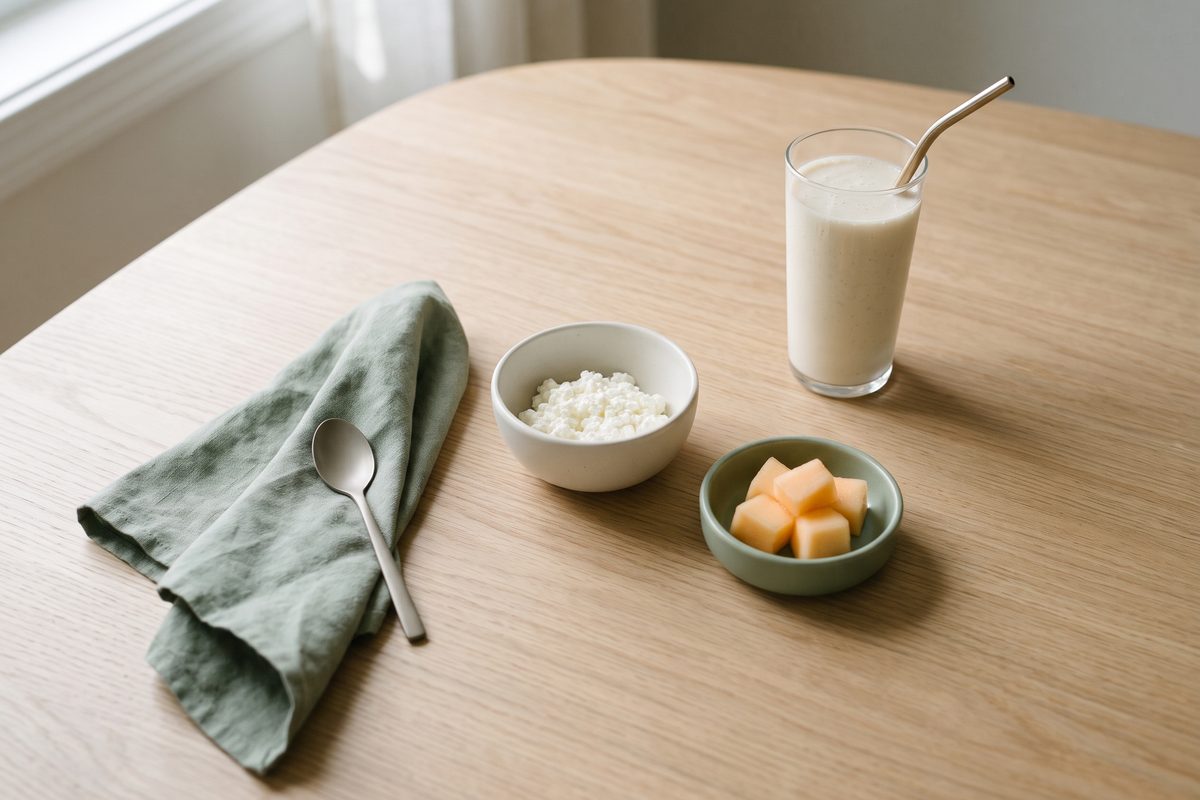
Liquid protein when solid food will not go: a protein shake, kefir, milk, a smoothie with protein powder, broth with egg or lentils stirred in.
Cold and bland. Cold food smells less. Yogurt, cottage cheese, cold chicken, crackers, melon.
Protein first, always. If you only manage five bites, make them protein.
Do not fill up on water or coffee right before meals. Sip between meals instead.
Keep protein prepared and visible: boiled eggs, sliced chicken, yogurt pots at eye level in the fridge. Decisions are the enemy when appetite is gone.
Tell your clinician if you cannot manage three small meals most days. A slower step up or a pause at the current dose is a normal adjustment, not a failure.
Foods that usually sit well
Eat this week
Protein shakes, kefir, milk
Greek yogurt, cottage cheese, soft cheese
Eggs, cold chicken, tuna
Soups with lentils or chicken
Smoothies with protein powder and banana
A little nut butter on toast, half an avocado
Skip for now
Big salads and raw vegetables that fill you without protein
Water or coffee right before a meal
Zero calorie fillers that take the place of food
Waiting until you feel hungry
Strong smelling or very fatty food on rough days
Alcohol
A sample day
| Morning | Smoothie with protein powder, banana and milk. |
| Mid morning | A cheese stick or a boiled egg. |
| Lunch | A cup of chicken soup with a few crackers. |
| Afternoon | Cottage cheese or a glass of kefir. |
| Early dinner | A few slices of cold chicken or tuna, a few spoonfuls of rice, melon. |
| Evening | Warm milk or a small yogurt. |
Small portions, but five protein moments. The total matters less than never going a whole day on almost nothing.
When to call your clinician
You cannot keep food or fluids down
You are losing weight much faster than your clinician expected
Dizziness, fainting, or signs of dehydration
You cannot manage three small meals most days for more than a week
You notice that you are starting to welcome not eating, or skipping meals on purpose. Say so to your clinician early; it is something to look at together.
Common questions
Is it dangerous to eat so little?
Short stretches are common and not dangerous for most people. Weeks of undereating are: fatigue, muscle loss, hair thinning and nutrient gaps follow. Eating by the clock prevents it; tell your clinician if you cannot.
Will my appetite come back?
Usually partly, as the dose settles and over the months. Aversions to smells and meat tend to ease first. Until then the clock, not hunger, decides when you eat.
Can I live on shakes?
As a bridge, yes. As a diet, no. Add solid protein, fruit and vegetables back as soon as you can, and ask a dietitian to check the total if shakes are most of your intake for more than a few weeks.
Why does meat taste wrong?
Aversions to meat and fat are common in the first weeks on these medications. Eggs, dairy, fish and tofu usually go down more easily, and the aversion is usually temporary.
Should I lower my dose?
Not on your own. Tell your clinician you cannot eat enough; a slower step up or a hold at the current dose is a normal adjustment.
Not sure whether food is the problem? The two minute quiz looks at your meals, protein, fat and fluids together and tells you where to start.