Short version
When you lose weight fast and eat little, your body takes some of it from muscle. On a GLP-1 that share can be a quarter or more of what you lose, and more if protein is low and you do not train. Muscle is what keeps your strength, your metabolism and your result when the dose comes down. Protein at every meal, two or three short strength sessions a week and no skipped meals are the whole program.
Why it happens
Weight loss always takes some lean mass along with the fat, and the faster the loss and the lower the protein intake, the larger that share. On GLP-1s appetite drops so far that protein is usually the first thing to fall away, and tiredness in the first weeks keeps people off their feet. Studies of these medications show that a meaningful part of the weight lost is lean mass, in some reports a quarter or more; studies that added resistance training and enough protein show much less.
Hair thinning a few months into rapid weight loss is the same story: the body setting priorities when intake is low. It is common and usually temporary.
What usually helps
Protein at every meal, 25 to 30 grams, spread through the day. Muscles can only use so much at once; three portions beat one big dinner.
A daily target. Roughly 0.55 to 0.75 grams of protein per pound of your target body weight (1.2 to 1.6 grams per kilogram) is the range dietitians work with. Ask your clinician or a dietitian to set your number.
Strength training two to three times a week. Bands, bodyweight, light weights, twenty to thirty minutes. The signal to the muscle matters more than the load.
Never skip meals. A skipped meal is muscle used for fuel.
Leucine rich protein: dairy, eggs, meat, fish, soy. A whey or soy shake when you cannot eat.
Keep walking, but know its limits. Walking is good for everything except holding muscle; only resistance does that.
Slow is fine. If you lose much faster than your clinician expects, ask whether a slower step up is wiser.
Do not diet on top of the medication. The drug already creates the deficit; adding a crash diet takes it from muscle.
Foods that usually sit well
Eat this week
Greek yogurt, cottage cheese, eggs
Chicken, turkey, fish, small portions of lean beef
Tofu, tempeh, edamame, lentils
Whey or soy protein shakes
Milk and kefir
Quinoa, beans and whole grains alongside the protein
Skip for now
Liquid only or very low protein days
Skipping meals because you are not hungry
Crash dieting on top of the medication
Alcohol, which blocks muscle repair
Long gaps between protein portions
Cardio only exercise plans
A sample day
| Morning | Greek yogurt with berries and a scoop of protein powder. |
| Mid morning | Two boiled eggs. |
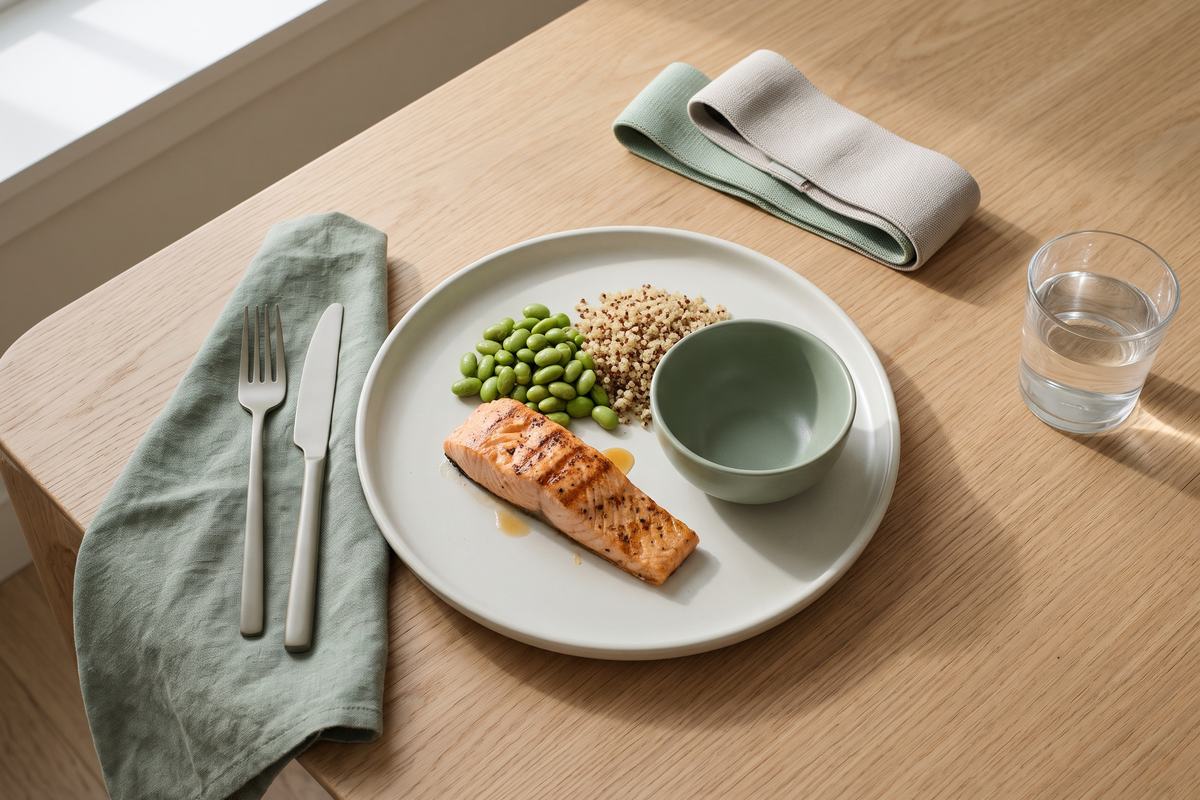
| Lunch | Grilled chicken with quinoa and edamame. |
| Afternoon | Cottage cheese. Twenty minutes of band or bodyweight work. |
| Early dinner | Salmon, lentils, steamed vegetables. |
| Evening | A glass of milk or kefir. |
Roughly 100 to 120 grams of protein in five portions. On peak days after a shot the portions shrink but the count stays.
When to call your clinician
Noticeable weakness: trouble climbing stairs or getting up from a chair
Dizziness or falls
Hair loss that is heavy or lasts beyond six months
Weight dropping much faster than your clinician planned
Muscle cramps together with low fluid intake
Common questions
How much protein do I really need?
A practical floor is 25 to 30 grams per meal, three times a day. The fuller answer is roughly 0.55 to 0.75 grams per pound of your target weight per day; a dietitian can set it for you.
Are protein shakes okay?
Yes, and they are useful on the days you cannot face food. Whey and soy are the most complete. They are a supplement to meals, not a replacement for them long term.
Is walking enough?
It is excellent for health and energy, but it does not protect muscle. Only resistance training does: bands, bodyweight, weights, two to three times a week.
Will my hair grow back?
Hair thinning after rapid weight loss is usually temporary. Once intake and protein stabilize, regrowth typically follows within three to six months. Protein, iron and zinc matter; tell your clinician if it is heavy.
I am over 60. Does this matter more?
Yes. Older adults lose muscle more easily and regain it more slowly, so protein and strength training matter even more, and your clinician may choose a slower pace.
Not sure whether food is the problem? The two minute quiz looks at your meals, protein, fat and fluids together and tells you where to start.